
If you’re playing regularly—especially on indoor courts—your pickleball shoes are doing a lot of work. They’re helping you stay balanced during quick side-to-side movements, absorb shock from hard stops, and grip the court so you can move with confidence. But unlike paddles, which often get all the attention, your shoes are just as important to your performance—and your long-term health.
So how do you know when it’s time to retire them?
Here’s how to tell, what to watch for, and why choosing the right replacement (like lightweight court shoes or purpose-built indoor pickleball shoes) can make a huge difference.
- You’re Slipping More Than Usual
One of the first signs that your court shoes are wearing down is reduced traction. If you notice you’re sliding on your pivots or struggling to push off for quick steps, it’s likely that the tread on your shoes has worn smooth.
This is especially common with players who play on gym floors or finished indoor surfaces, where grip is everything. Even the best indoor court shoes will lose their edge over time.
If you’re slipping on courts where you used to feel secure, it’s time to inspect the soles—and probably replace the shoes.
- The Soles Look Worn Down or Uneven
Pick up your shoe and look at the sole. You’ll often see high wear in specific areas—like the ball of the foot, where you push off during dinks, or the outer heel, where you land when recovering. If the grooves are visibly worn flat or the tread is uneven, the shoe’s ability to grip and stabilize your foot has declined.
Many players rotate between indoor pickleball shoes and outdoor pairs to prolong life, but if your indoor soles look slick, they’re no longer doing their job.
- The Midsole Feels Flat
You might not notice this one right away—but your knees and ankles will. The midsole is the cushioning layer that absorbs shock and protects your joints. Over time, the foam compresses and doesn’t bounce back like it used to.
If your legs feel more sore than usual after playing—or you’re noticing joint discomfort that wasn’t there before—it may not be your form. It might just be that your shoes have stopped cushioning your movement.
Racquetball shoes and lightweight court shoes often have thinner midsoles to keep you quick, but that makes it even more important to monitor their support.
- The Uppers Are Breaking Down
While the sole affects performance, the upper part of the shoe is what keeps your foot stable. If you start to see:
- Fraying at the sides
- Eyelets tearing
- Looseness when laced
…that’s a sign the shoe is no longer giving you the lateral support you need.
In pickleball, especially indoors, you’re constantly moving side to side. The best indoor pickleball shoes for men and women are designed to cradle your foot securely—but once that fit loosens, the risk of ankle sprains and rolled feet increases dramatically.
- You’ve Logged Over 50–60 Hours of Play
While some players go by months, it’s smarter to think in terms of hours on court. Most court shoes start to decline between 50 and 70 hours of active use—so if you’re playing 3 times a week for 90 minutes, you’re already hitting the 60-hour mark in about 12 weeks.
That’s why even some of the best indoor court shoes wear out faster than you’d expect. Lightweight models especially—designed for speed, not long-term durability—tend to wear quicker. Rotating two pairs can help you extend the life of each.
- You Notice More Fatigue or Aches in Your Feet
If your feet start feeling fatigued after shorter sessions or your arches feel strained even when you’re standing, your shoes may not be supporting you properly anymore.
This is a subtle warning sign—but an important one. Don’t ignore it just because your shoes look okay. If you’re wearing lightweight court shoes or minimalist styles, your feet may be absorbing more impact than they should.
Players with high arches or previous injuries should pay close attention to this sign and consider switching to a model with better arch support and shock absorption.
- You See Cracking or Separation
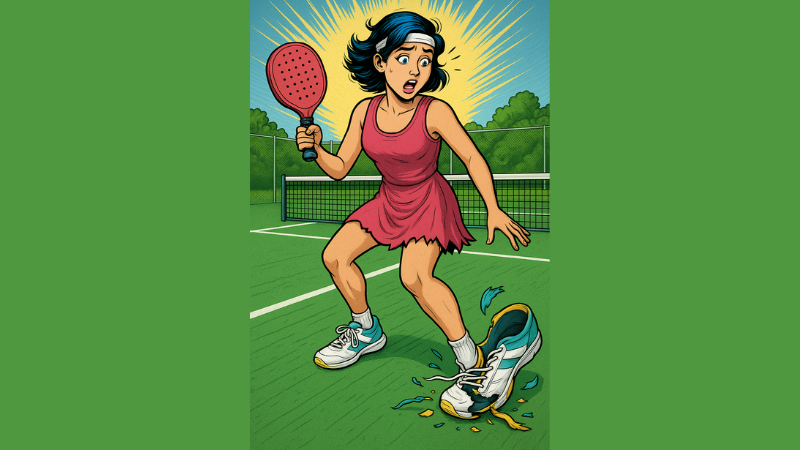
If the outsole starts peeling away from the midsole—or the upper detaches from the sole—you’re officially overdue. You wouldn’t play with a cracked paddle, so don’t lace up shoes that are falling apart.
Even if it seems minor, separation means the structure of the shoe has broken down. It’s time to replace them before they affect your movement or lead to injury.
Choosing Your Next Pair: What to Look For
When it’s time to replace your shoes, be intentional about what you buy. Not all court shoes are equal, and many players make the mistake of using running shoes or generic sneakers that aren’t built for the stop-start nature of pickleball.
Here’s what to look for:
Best Indoor Pickleball Shoes (Men’s & Women’s)
Look for models that are:
- Designed for lateral movement – like tennis, volleyball, or racquetball shoes
- Low-profile with good court feel – you want balance, not bounce
- Supportive at the midfoot and heel – to protect against rolling
- Grippy outsole for gym floors – gum rubber is ideal for traction
- Available in men’s and women’s sizing – a proper fit matters for stability
Brands that make great indoor-specific options for both men and women include DIADEM, Skechers, FILA, Babolat, and Mizuno. Some even have indoor pickleball shoes women’s lines with slightly narrower fits or lower volume to match female foot shapes.
If you prefer agility and speed, look for lightweight court shoes that won’t weigh you down but still offer enough grip and structure to support rapid changes of direction.
Final Thought: Your Feet Deserve an Upgrade
Your paddle may win the points—but your shoes keep you on the court.
Replacing your indoor pickleball shoes at the right time helps you move better, avoid injury, and enjoy the game more. So if you’re noticing wear and tear, slipping more often, or feeling more aches after play, don’t wait.
Your feet will thank you—and so will your game.