
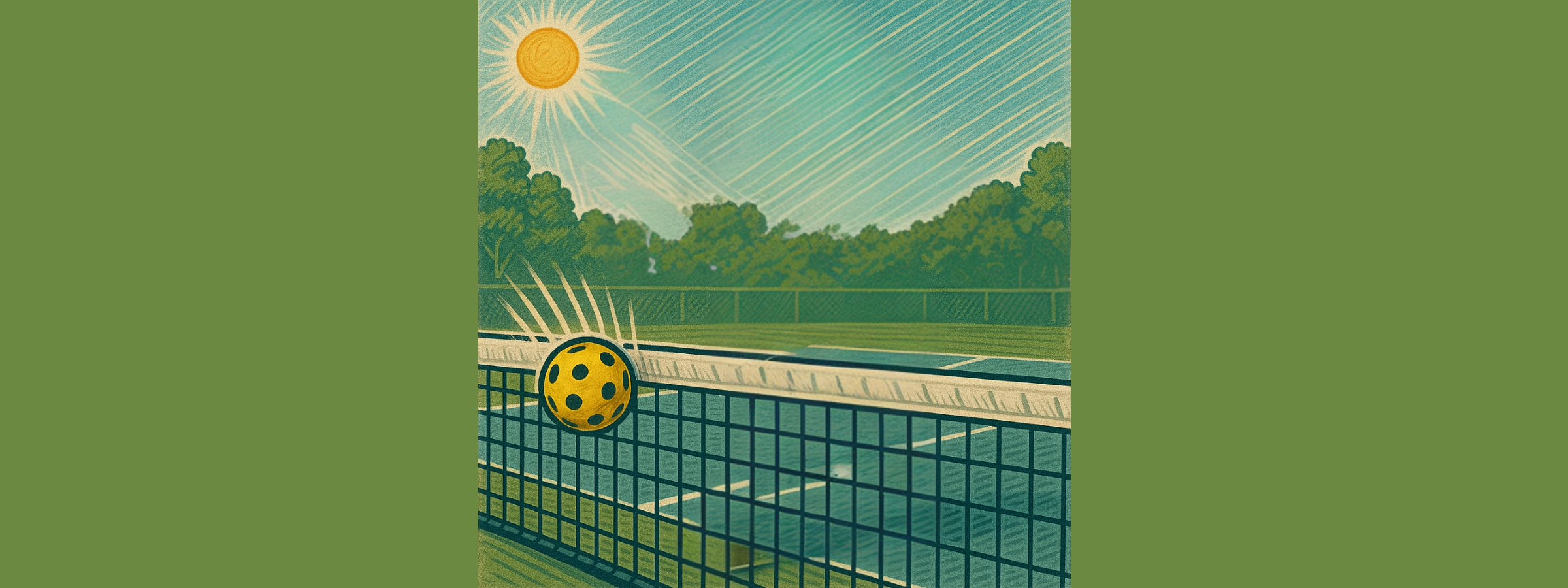
A: You’re locked in a firefight at the kitchen. The ball is flying back and forth fast. You block one… punch the next… and then suddenly you’re a few steps behind the kitchen line, off balance, and out of the point.
Backing up during fast hands exchanges is a common mistake—even experienced players do it. But once you start retreating, you lose control of the point, give your opponents more angles, and make every volley harder to time.
Let’s talk about why it happens—and what to do instead.
-
Why Do Players Back Up in the First Place?
Most of the time, it’s not intentional. Backing up is a natural reaction to pressure.
When the ball starts flying:
- You want more space to react
- You feel jammed or overwhelmed
- You flinch and instinctively lean back
- You don’t trust your paddle skills up close
In the moment, it feels safer. But here’s the truth: retreating gives your opponent the advantage.
-
Why Backing Up Hurts Your Game
Every step back from the kitchen line creates problems:
- It opens up the middle. Your reach shrinks, and now your opponents can easily place shots at your feet or in the gap between you and your partner.
- It gives your opponent more time. A soft roll shot that would’ve landed right in front of you now bounces low at your shoelaces.
- You lose your ability to attack. From a step or two back, you’re hitting up—which usually leads to pop-ups or weak resets.
In short: backing up turns you from the attacker into the defender in an instant.
-
The Fix: Commit to Holding the Line
The best way to win hands battles is to stay balanced, stay compact, and stay put.
That means:
- Feet behind or just at the NVZ line
- Weight forward
- Paddle up
- Legs bent
- Ready to block or counter from a solid base
Think of it like this: you’re not waiting for the ball—you’re owning your space at the kitchen.
-
Your Stance Matters More Than You Think
When you’re standing tall with straight legs and your paddle down, you’re inviting panic. That’s when players freeze or stumble backward.
Here’s how to set your stance to stay confident:
- Bend your knees. Lower your center of gravity and keep your weight slightly forward.
- Keep your paddle up and in front of your chest. This gives you a shorter reaction path to the ball.
- Stay on the balls of your feet. You’ll move faster and stay balanced during quick exchanges.
Bonus tip: Think block first, attack second. If your goal is just to survive the exchange, you’re more likely to get pushed around. But if your stance says “I’m ready to strike,” your body responds that way.
-
Practice Blocking With Purpose
If you tend to back up when things get fast, you may be trying to do too much with your paddle. Most players over-swing or tense up during fast exchanges.
Instead, try this:
- Loosen your grip. Use a grip tension of about 4 out of 10—firm, but not rigid.
- Angle the paddle forward slightly. Let the ball rebound off your paddle instead of swinging.
- Use small, compact motions. Think of catching the ball on your paddle face—not hitting it.
Drill idea: have a partner stand across the kitchen and fire rapid volleys at you while you block them back. Focus on staying planted and letting the paddle do the work.
-
When Should You Step Back (If Ever)?
There are a few exceptions where backing up intentionally can make sense:
- If your opponent hits a lob
- If you’re setting up a reset from a fast attack
- If you’re completely off balance and need space to recover
But even then, step back with purpose, not panic. The goal should always be to reset and return to the kitchen line as soon as possible.
Backing up is a defensive move—but in pickleball, the real magic happens at the kitchen.
Final Thoughts
If you’re backing up during hands battles, don’t beat yourself up. It’s a reflex, and every player has to work through it. But the moment you stop retreating and start holding your ground, you’ll notice something amazing:
- You’ll win more fast-paced points
- You’ll feel calmer during pressure moments
- You’ll start landing your counters and blocks more cleanly
Hold your line. Trust your paddle. And next time the ball starts flying, let your opponents be the ones who panic.
Need help getting faster at the net? Check out this week’s gear deals—there’s a lightweight paddle that might just make your reflexes feel sharper.