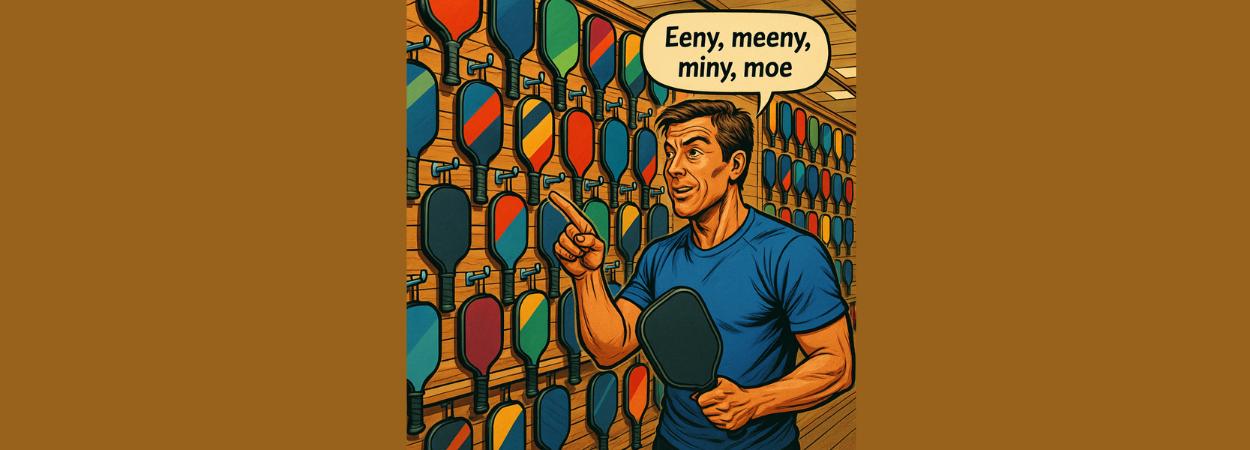
A: Choosing between a “power” paddle and a “control” paddle can feel like a mystery—especially if you’ve only been playing for a short time. The right paddle can make your game easier, more consistent, and even more fun. The wrong one can hold you back.
Let’s unpack what “power” and “control” actually mean, how the design affects your shots, and how to pick the one that fits your style right now.
Understanding Key Paddle Terms
Before diving in, here are a few paddle specs you’ll see in descriptions:
- Core Thickness: The thickness of the material inside the paddle, usually measured in millimeters (mm). Thicker cores (16mm) soften the feel and add control; thinner cores (13mm) create more pop.
- Swing Weight: How heavy the paddle feels when you swing it, based on balance and shape—not just its scale weight. A higher swing weight adds power but can slow quick reactions at the net.
- Paddle Face Stiffness: How rigid the hitting surface is. Stiffer faces (often carbon fiber) rebound the ball faster for more power; softer faces (often fiberglass or composite) absorb energy for more control.
- Surface Texture: Some paddles have a slightly rough surface to help generate spin.
- Grip Size & Shape: The circumference and contour of the handle affect comfort, control, and injury prevention. Most paddles come in 4–4.5 inch circumferences.
- Weight Range: Most paddles weigh between 7.3 and 8.5 ounces. Lighter paddles offer quicker reaction time but less power; heavier paddles hit harder but can tire the arm.
What’s a Power Paddle?
Designed For: Generating speed and force on drives, serves, and smashes with less effort.
Typical Features:
- Thinner core (13mm or less)
- Stiffer face material (carbon fiber, hybrid composite)
- Higher swing weight
- Often elongated shape for extra reach
Pros:
- Easy to put away high balls
- Helps players with less strength add pace
- Can pressure opponents with aggressive play
Cons:
- Less forgiveness on soft shots
- Requires more touch to avoid sending balls long
Examples:
What’s a Control Paddle?
Designed For: Accuracy, placement, and touch—especially in the soft game.
Typical Features:
- Thicker core (16mm or more)
- Softer face materials (fiberglass, softer composites)
- Lower swing weight
- Often wider body for a larger sweet spot
Pros:
- Easier to keep dinks low and drops consistent
- Absorbs pace from opponent attacks
- Better for players focusing on strategy over raw speed
Cons:
- Requires more effort for deep serves and drives
- May feel underpowered from the baseline
Examples:
Power vs. Control: Shot-by-Shot Comparison
| Shot Type | Power Paddle Advantage | Control Paddle Advantage |
| Drives & Serves | More pace with less effort | Easier depth control |
| Volleys | Quick put-aways | Softer, more precise touch |
| Dinks & Drops | Can pop balls up if not careful | Keeps shots low and accurate |
| Resets | Harder to take pace off | Easier to absorb and reset balls |
| Spin Shots | Some power paddles with textured faces add spin | Softer paddles allow more spin control |
Who Should Choose Which?
- Aggressive Baseliner: Power paddle. You like to hit hard, keep opponents on defense, and finish rallies quickly.
- Soft Game Specialist: Control paddle. You win by outlasting opponents at the net and forcing errors.
- Beginners: Often better off starting with control to build touch first.
- Seniors or Players With Joint Issues: Consider a lighter control paddle with vibration dampening to protect wrists and elbows.
- Juniors or Smaller Players: Balanced or control paddles can give more forgiveness while still learning proper mechanics.
The Balanced Option
Balanced paddles blend features of both. They won’t match the pure pop of a power paddle or the feathered touch of a control paddle, but they offer versatility for players who want a bit of both.
Example: Paddletek Tempest Wave Pro
Price and Value
- Entry-level: $50–$100. Good for beginners but may lack advanced materials and durability.
- Mid-range: $120–$180. Most popular range for quality without breaking the bank.
- Premium: $200+. Top materials, optimized design, and better feel.
You can find both power and control paddles in each price tier.
Try Before You Buy
If possible, demo paddles at local clubs or pro shops. Hit both from the baseline and at the kitchen. See where you’re most comfortable.
Online Buying Tips:
- Read verified reviews from players with your skill level
- Watch slow-motion demo videos to see ball response
- Check the return policy—some brands offer 30-day trials
Final Takeaway
There’s no single “best” paddle—only the best one for you right now. If you’re still working on consistency, a control paddle can help keep rallies going and sharpen your soft game. If you’re confident in your touch and want to add finishing power, a power paddle might be the next step.
And remember: paddles aren’t forever. Your choice can evolve as your game does.