
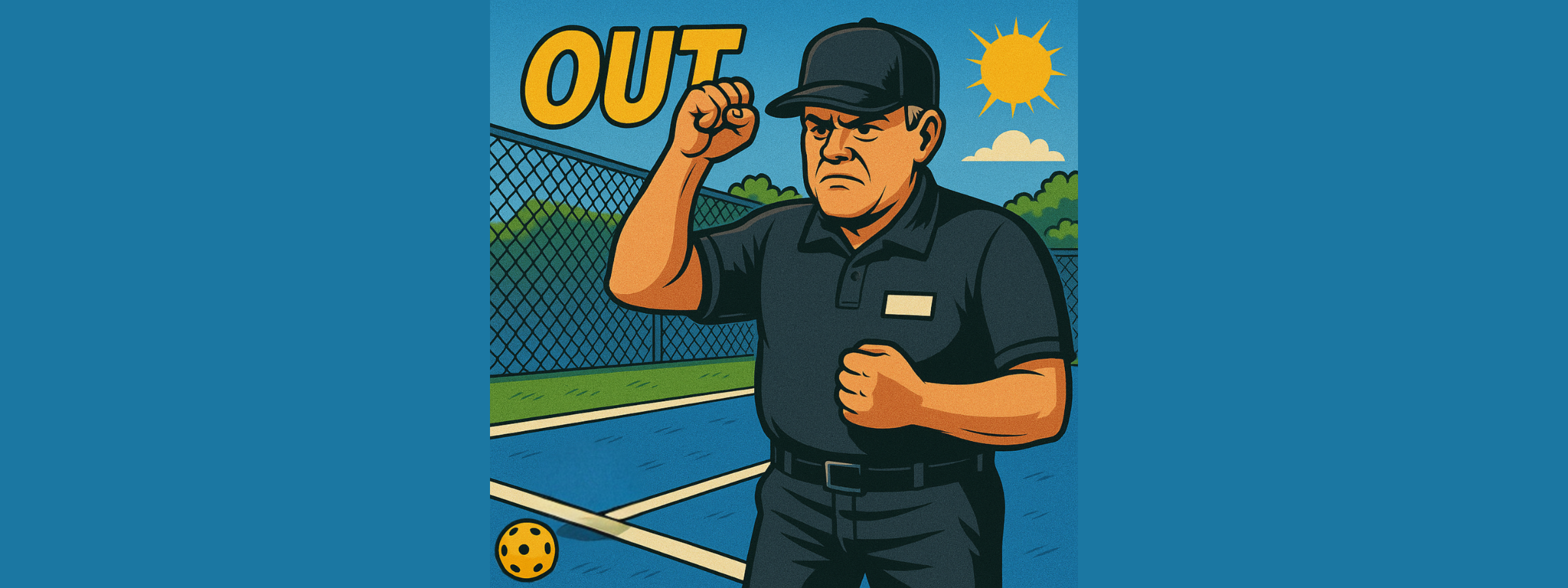
A: You’re in a good rally, you see your opening, you go for the shot—and it sails just past the baseline. Again.
If you’re constantly hitting balls out, especially when you’re trying not to, you’re not alone. This is one of the most common frustrations for recreational players. It can feel like you’re doing everything right, and the ball still betrays you.
The good news? Hitting out isn’t about bad luck or lack of skill. It’s almost always caused by small, fixable issues in swing size, contact point, or paddle angle. Let’s take a look at why it happens—and what you can do to fix it.
Why Do Pickleballs Go Out?
There are a handful of common causes, and once you identify which ones apply to you, it becomes much easier to clean up your game.
- You’re Over-Swinging
This is the most obvious culprit. Recreational players often use big, tennis-style swings that generate more power than they need—and that makes controlling depth difficult.
Even a slight “extra push” at the end of your swing can add a foot or two to your shot, which is all it takes for a ball to drift long.
What to do instead:
Shorten your backswing and think smooth, not strong. Controlled swings keep the ball in, especially on drives and roll volleys.
- Your Paddle Face Is Too Open
If your paddle face is tilted upward at contact—even just slightly—it sends the ball higher and deeper. This is especially common on volleys, resets, and third shot drops.
When you’re under pressure, it’s natural to try to “lift” the ball over the net—but that lifting motion often creates an angle that leads to a pop-up or a long shot.
Fix it:
Check your paddle angle, especially on soft shots. Keep the paddle face neutral or slightly closed and use your legs to lift—not your wrist.
- You’re Making Contact Too Far Back
If you’re hitting the ball late—behind your body instead of out in front—you lose control over both direction and height. The result is often a wild swing that sends the ball deep or off target.
The fix:
Focus on meeting the ball in front of your hip or shoulder, depending on the shot. This is especially important on fast volleys or roll shots at the kitchen line.
- You’re Hitting Flat When You Should Add Spin
Flat shots have no margin for error. A little too much power or angle, and they fly. Adding even a little topspin helps bring the ball down after it clears the net—keeping your shots deeper and in bounds.
How to add spin:
Brush up slightly on the ball with a low-to-high motion, especially on serves, drives, and aggressive returns. You don’t need to overdo it—just enough to shape the shot downward.
- You’re Going for Low-Percentage Targets
This one’s about decision-making. If you’re aiming for the sidelines, back corners, or trying to win points outright with every shot, you’re increasing your chances of missing.
Try this instead:
Aim for higher-percentage targets—like the center of the court or your opponent’s backhand side. Hit deep, but not to the edge. You’ll win more points by keeping the ball in and letting your opponent make the mistake.
Simple Practice Ideas to Build Control
You don’t need to drill for hours to fix this. Just a few focused reps can help reprogram your swing.
Wall Drill
Stand a few feet from a wall and practice hitting controlled dinks or volleys. Focus on:
- Paddle face control
- Making contact out front
- Keeping shots low and clean
Target Game
Place cones or towels near the baseline and try to land your shots just in front of them. This trains you to aim deep but safe.
Mini-Court Game
Play in the service boxes only. This shortens the space and forces you to focus on compact, in-control swings.
Quick Mindset Shift: Don’t “Avoid Missing”—Play With Purpose
Many players try to not hit out by playing tentatively or slowing down too much. Ironically, this leads to poor technique and even more errors.
Instead of playing not to miss, try playing with clear, purposeful swings and smarter targets. The more confident you are, the better your shots will land.
Final Thoughts
If you’re hitting balls out consistently, don’t get discouraged. It’s usually the result of a few small habits—most of which are easy to adjust:
- Shorten your swing
- Keep your paddle angle in check
- Make contact out front
- Use topspin when appropriate
- Aim for smarter, safer zones
Over time, these little changes will stack up to big improvements. You’ll find yourself playing with more confidence, fewer unforced errors, and a lot more control—without giving up power.
And if your paddle isn’t helping—some are built for control, others for power—scroll up to check out this week’s gear deals. You might find one that helps keep those shots in where they belong.