
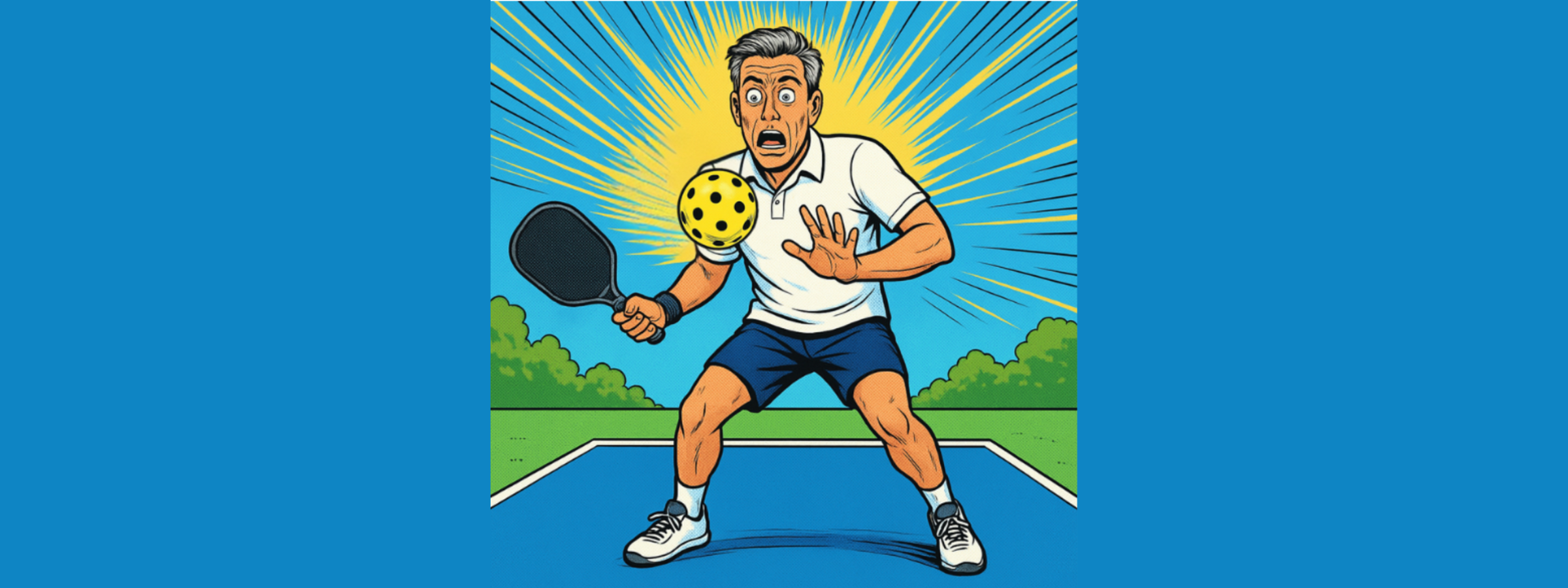
A: Every pickleball player knows the feeling: you’re at the kitchen (the non-volley zone line), ready for a rally, and suddenly the ball rockets straight at your chest or hip. You freeze, swipe awkwardly, and the ball pops up—easy put-away for your opponent.
Getting jammed happens to everyone, but it doesn’t have to be the end of the point. With the right paddle position, grip, and footwork, you can handle body shots calmly and even turn them into opportunities.
Why Jam Shots Happen
- Reaction time: Balls come fast at the kitchen, giving you little margin for error.
- Paddle position: If it’s too low or pulled back, you’re late.
- Grip tension: White-knuckling the handle makes the ball rebound high.
- Footwork: Flat feet or leaning backward leave you stuck.
The result: you get jammed and lose control.
Paddle Position: Backhand-Biased & Ready
One of the best ways to prepare for jam shots is your ready position.
- Hold the paddle in front of your sternum, like you’re carrying a tray.
- Keep it slightly angled forward, ready to absorb pace.
- Bias the paddle slightly toward your backhand side—this covers your torso better than forehand-ready and is why most pros prefer it.
- Keep your elbows comfortably in front of your body (not tucked at your sides). This improves reaction speed to balls at the midline or hip.
The goal is to “block and redirect” rather than swing.
Grip: Looser Is Better
When pressure comes, most players squeeze harder. Unfortunately, that turns your paddle into a trampoline.
- On a 1–10 scale, aim for 3–4 grip pressure.
- A loose grip absorbs speed and keeps your blocks low.
- Try it: tap a ball against your paddle once with a death grip, then again with a light grip. Notice how much softer and more controlled the second one feels.
Footwork: Create Space, Don’t Just Swipe
Even with good paddle prep, some balls will come straight at your body. That’s where footwork saves you.
- Stay on the balls of your feet with knees bent, ready to shuffle.
- Use a split step—a small hop timed to your opponent’s contact. This preloads your balance so you can move instantly.
- Dominant-side jams (paddle-hand hip): step back slightly with your dominant foot to clear a swing path.
- Non-dominant-side jams: drop your shoulder or rotate torso slightly, then block with your backhand. Often easier than trying to reach with forehand.
Balanced feet = balanced hands.
Drills to Build Confidence
- Body Block Drill: Have a partner feed balls at your torso. Focus only on soft blocks with minimal swing.
- Quick Shuffle Drill: Alternate body shots and sideline balls. Shuffle your feet quickly instead of reaching.
- Loose Grip Rally: Rally where every ball must be blocked softly with a relaxed grip.
These don’t just train skill—they build calmness under fire.
Mindset: Survive First, Win Next
Most jam shots aren’t won outright—they’re survived. Your first goal is to neutralize. Once you block the ball back low, the rally resets, and your chance to counter comes on the next shot.
Stay calm, trust your block, and remember: patience wins the point, not panic.
Final Takeaway
Getting jammed is normal—but with your paddle up, grip loose, and feet ready, you’ll stop fearing body shots and start handling them with confidence.
So next time someone tries to jam you, they’ll run into your calm block instead of a popped-up floater.