
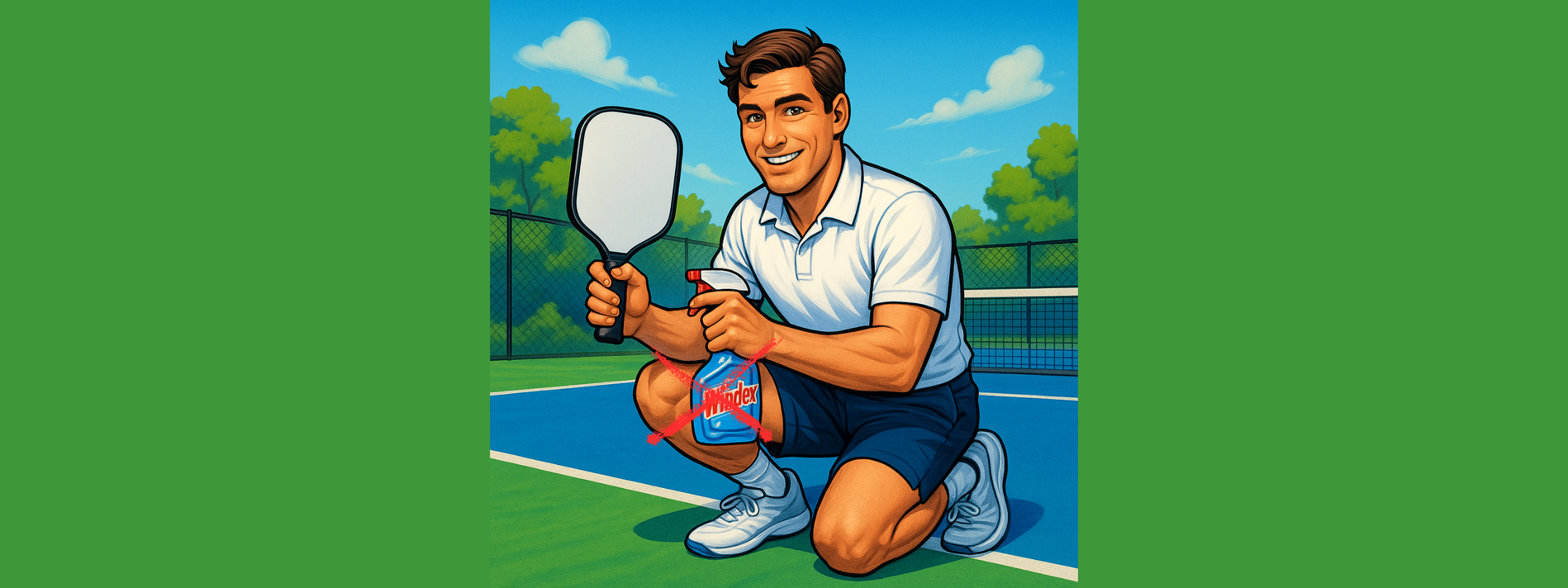
Q: Is There a Right Way to Clean My Paddle and Balls?
A: Yes—and keeping your pickleball gear clean isn’t just about looks. A dirty paddle face can affect spin and control, and scuffed-up balls don’t bounce the same or last as long. Plus, if you’re playing regularly (especially with others), it’s worth keeping things hygienic too.
Here’s a simple guide to cleaning your paddle and pickleballs the right way—so they last longer, perform better, and don’t turn your gear bag into a science experiment.
Why You Should Clean Your Paddle
Let’s start with the paddle. Every time you play, dirt, sweat, sunscreen, and court dust accumulate on the surface. Over time, this can reduce the grit on textured faces—especially carbon fiber or raw carbon paddles designed to generate spin.
If your paddle:
- Feels slicker than usual,
- Has visible grime or fingerprints, or
- Isn’t gripping the ball like it used to,
…it’s time for a clean.
How to Clean a Pickleball Paddle (Without Damaging It)
- Use a Soft, Damp Cloth
Wipe the paddle face gently with a microfiber cloth and a little water. This removes dust, dirt, and oils. Don’t soak it—just dampen the cloth enough to lift grime.
- For Tough Spots, Use Mild Soap
If the paddle is greasy (from sunscreen, snacks, or hand sweat), add a drop of dish soap to the cloth. Gently clean and then wipe again with plain water to remove any residue.
- Avoid Harsh Chemicals
Never use alcohol wipes, bleach, or cleaning sprays with solvents. These can damage surface coatings or weaken the adhesive layers between the face and core.
- Let It Air Dry
After wiping, let the paddle dry completely before storing it in your bag. This prevents mildew and keeps moisture from breaking down the core materials.
What About Paddle Grit?
If you use a gritty or textured paddle, keeping the surface clean actually helps maintain its spin potential. Some players use a Magic Eraser or specialized grip-cleaning pad (like a melamine sponge) to gently scrub the face and “refresh” the texture.
Don’t scrub too hard—just enough to lift residue. You’ll be surprised how much performance comes back once the paddle’s face is clean.
How to Clean Pickleballs
Pickleballs don’t seem like they need cleaning—but over time, they pick up dirt, sweat, and court debris. This affects bounce and spin—and can make them slick or unpredictable on the paddle.
Here’s how to clean them:
- Use Warm Soapy Water
Drop them in a bowl, bucket, or sink with warm (not hot) water and a bit of mild dish soap. Swish them around for a minute or two.
- Scrub Gently if Needed
If you’ve been playing outdoors on gritty surfaces, a soft sponge or cloth can help remove buildup stuck in the holes or seams.
- Rinse and Dry
Rinse the balls thoroughly and let them air dry on a towel. Don’t store them wet—they’ll attract more dirt and may warp over time.
Bonus: Clean Your Grip, Too
If your paddle’s grip feels slick, sticky, or just a little gross, it’s probably time for a wipe—or a replacement.
- Wipe it down with a slightly damp cloth (water only).
- If it’s really worn, consider replacing it with a fresh overgrip. Most overgrips are inexpensive, easy to apply, and can dramatically improve feel and traction.
A clean grip = better control, especially when your hands get sweaty mid-match.
How Often Should You Clean Your Gear?
- Paddle face: Every few sessions, or any time it looks visibly dirty
- Pickleballs: Once a month, or more often if used on dusty or outdoor courts
- Grip: Wipe weekly, replace every 1–2 months depending on use
If you’re a regular player, these small habits can extend the life of your gear and improve your game—without costing you a dime.
Final Thoughts
A clean paddle face gives you better spin and control. Clean balls bounce more predictably. And a clean grip can mean the difference between hitting your target or watching your paddle twist in your hand.
It only takes a few minutes—but it makes a big difference.