
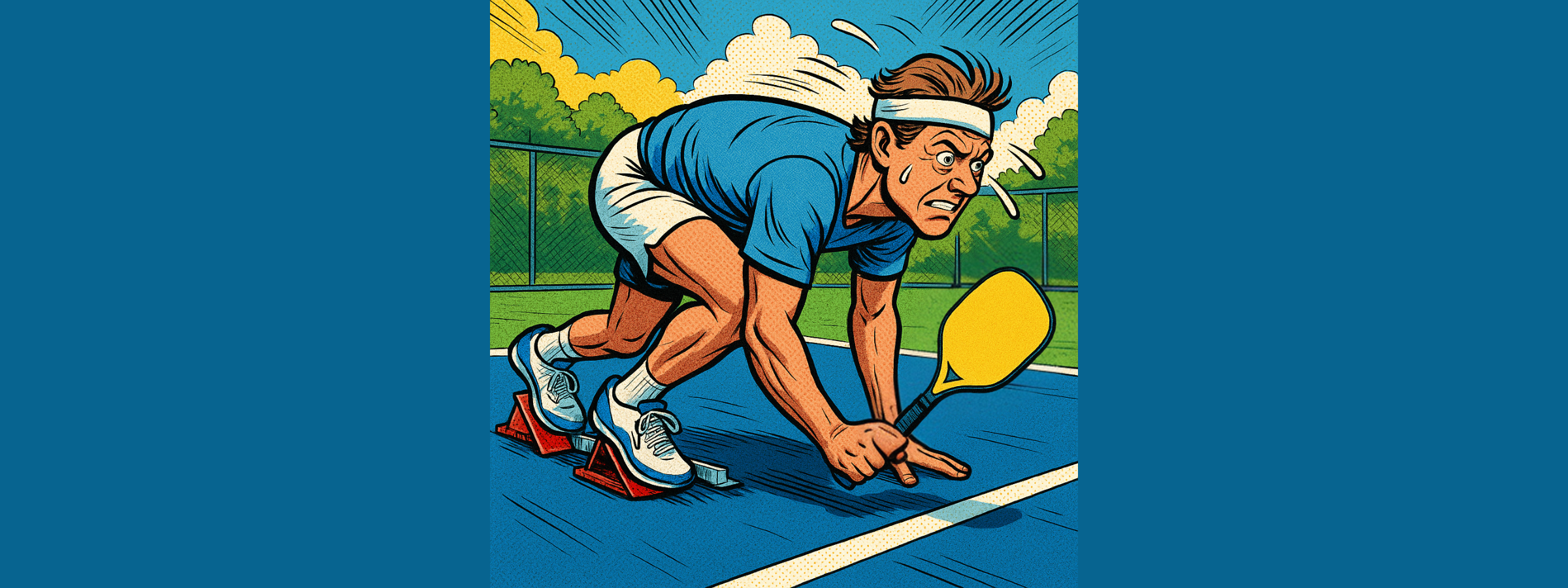
A: You’ve probably heard it a hundred times: “Get to the kitchen!” And yes—it’s true that the non-volley zone line (aka the kitchen line) is where most points are won in pickleball. But should you always rush up right after you serve?
Not exactly. While the goal is to eventually get to the kitchen line, timing is everything. Let’s break down why the kitchen is so important, what happens after your serve, and how to move forward with purpose—not panic.
Why the Kitchen Line Matters
The kitchen line is where the game slows down and opens up. From this position, you can:
- Cut off angles
- Hit volleys out of the air
- Pressure your opponents
- Control the pace with dinks and fast hands
It’s hard to win rallies consistently if you’re stuck at the baseline. So yes, your goal after serving is to work your way forward. But there’s a catch.
Enter: The Double Bounce Rule
After every serve in pickleball, there’s a built-in waiting period. The double bounce rule requires:
- The returner must let the serve bounce
- The serving team must then let the return bounce
Only after the second bounce can the serving team play the ball—and by then, your opponents are likely already at the net.
This is important: if you charge forward immediately after serving, you’ll likely find yourself in “no-man’s land” when the ball is returned deep—and that’s one of the worst places to be.
So, When Should You Move Up?
You don’t want to stay planted at the baseline forever. But you also don’t want to blindly sprint forward and get caught mid-step while trying to hit a difficult third shot.
Here’s what you should consider:
- The Depth of the Return
If your opponent sends back a deep, fast return, you’ll need to stay back to set your feet and prepare your third shot. Rushing forward here will only force an awkward, off-balance swing.
If the return is short or floats, you may have time to move in and play a more aggressive third shot—like a drop or a drive from inside the baseline.
- Who’s Hitting the Third Shot
If your partner is handling the third shot and they’re comfortable with it, you can begin moving forward—but stay alert. If they struggle with soft shots or your opponents attack aggressively, you might want to hang back just a step to cover the middle.
If you’re hitting the third shot, your priority is footwork and balance—not rushing to the net. Make sure you’re in position before attempting to move forward.
- How Confident You Are With Your Third Shot Drop
If you’ve got a reliable third shot drop, you can hit it and begin advancing behind it. This is called “drop and crash“—a common move among competitive players.
But if your drop is inconsistent or your opponent is a poacher at the net, it may be smarter to hold position until you’ve reset the point.
What About the Transition Zone?
The area between the baseline and the kitchen is often called the transition zone or “no-man’s land.” It’s not that stepping into it is always bad—but getting stuck there while your opponent is blasting a drive or attacking a weak drop? That’s when things go wrong.
Key rule:
Move forward when you’re in control of the point—not when you’re chasing it.
Use your third shot (drop or drive) to create space so you can move up safely.
What the Pros Do
If you watch high-level pickleball, you’ll notice that pro players don’t blindly sprint to the kitchen line.
They:
- Wait for the return
- Play a controlled third shot
- Then move forward with the ball, not ahead of it
They also split-step and stay balanced in the transition zone, ready to block, reset, or volley depending on the reply. The key? Every step has a purpose.
When It’s Actually Smarter to Stay Back
While the goal is to advance, there are moments where staying put briefly is the smarter play:
- The return is deep and fast
- You’re off balance after serving
- Your partner is still moving
- You’re playing against aggressive opponents who attack early
In these cases, hold your position, hit a clean third shot, and then move up as a team.
Final Takeaway
So—should you always try to get to the kitchen line after serving?
Yes… but not blindly.
Here’s your priority list:
- Let the return bounce
- Hit a balanced third shot
- Then move forward with control
Rushing to the line before you’ve handled the return often leads to weak shots, pop-ups, and easy points for your opponents. But advancing with purpose—especially behind a solid drop or well-placed drive—is how you take control of the rally.
Think of it this way: Serve smart. Move when ready. Win the point.
Would you like a companion court diagram showing the serve-return-third shot flow with movement zones? I can create that next!