
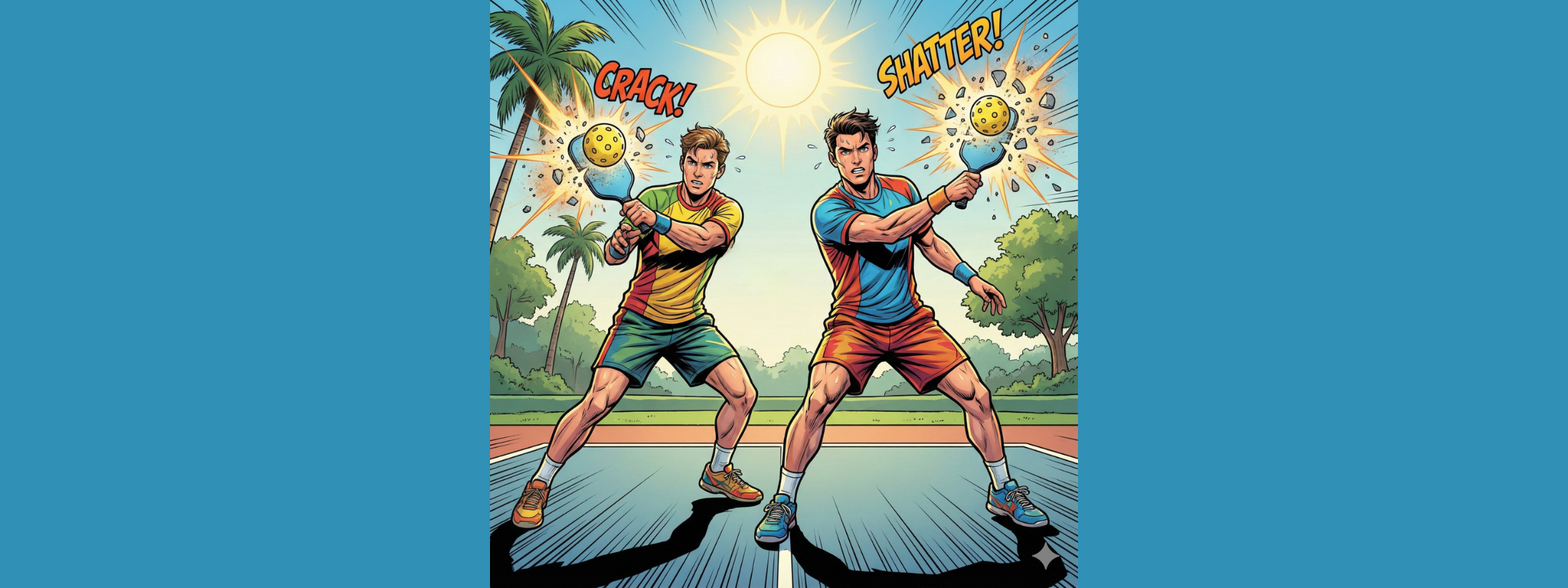
Playing against two bangers can feel overwhelming—especially when the pace comes fast and the rallies stay short. But here’s the truth most players don’t hear often enough: two bangers only win when you help them.
They thrive on panic, rushed swings, and pace coming right back at them. When you take those things away, their advantage shrinks quickly. Smart defense doesn’t try to overpower bangers—it redirects, absorbs, and forces them to hit one more ball than they want to.
Here’s how to do exactly that.
Reframe the matchup first
Before tactics, reset the mindset.
Bangers want:
- Balls they can hit flat
- Pace returned directly to them
- Short points decided early
- Predictable angles
Your goal isn’t to “win the power game.” Your goal is to change the type of rally they’re forced to play. When rallies slow down, stay low, and require touch, bangers often lose patience or precision.
Start with the highest-percentage defensive priority: block first
One of the biggest mistakes players make against bangers is trying to counter immediately. That’s rarely the smartest first response.
Treat the first hard ball as something to neutralize, not punish.
Use soft hands and a compact paddle face to absorb pace and drop the ball back into the kitchen. Think of your paddle as a cushion. When you block instead of swing, the ball comes off slower, lower, and pulls your opponents forward—often into shots they don’t like.
Rule of thumb for countering:
Only counter when the ball is above net height, in front of you, and you’re balanced. If any of those are missing, block.
Keep the ball low—height feeds power
Power players love balls that sit up. Even modest height gives them permission to swing big.
Against two bangers:
- Prioritize low trajectory over pace
- Don’t worry about speed—worry about height
- A soft, low block is far more effective than a medium-pace counter
If they’re hitting up, you’re winning.
Aim middle and at the feet
Target choice matters more than shot speed.
The middle:
- Reduces angles
- Forces communication
- Creates hesitation
The feet:
- Force awkward half-volleys
- Prevent full swings
- Lead to pop-ups or errors
You don’t need sharp angles or highlight shots. Simple targets frustrate bangers far more than fancy ones.
Paddle, grip, and stance fundamentals
Against pace, setup does most of the work.
- Paddle up at chest height
- Slightly closed face
- Compact, quiet hands
- Soft grip to absorb pace
- Knees bent, weight slightly forward
A relaxed grip is critical. Tight hands turn blocks into pop-ups. Soft hands turn drives into dinks.
Split-step as your opponents make contact so you’re balanced—never reaching or frozen.
Handling spin and body-targeted drives
Many bangers add topspin or aim at the chest.
- Against topspin: angle the paddle slightly down and meet the ball earlier
- Against body shots: take a small sidestep to create space—don’t let the ball jam you
- Keep the motion short and stable; let their pace do the work
Movement and positioning: stay safe and connected
To counter pressure:
- Don’t backpedal—pivot and shuffle instead (this avoids falls and awkward overheads)
- Stay side-by-side with your partner
- Advance together when you earn the net
- Avoid camping in the transition zone
Defensive success isn’t about speed—it’s about being in the right place together.
Use depth selectively to reset
Kitchen resets are the priority, but from deeper positions, a high, deep neutral ball can also reset the point—especially if you’re pinned back. Depth buys time and disrupts rhythm without feeding pace.
Return-of-serve context
Power teams often start their pattern with a big serve followed by a drive. A high, deep, arcing return gives you time to set your feet and execute the block-and-reset plan on the third. Short or flat returns invite immediate pressure.
Common mistakes players make against bangers
- Swinging harder to “match” power
- Countering the first hard ball
- Leaving the paddle low after soft shots
- Panicking when pace increases
- Forgetting partner positioning
Every one of these mistakes gives bangers exactly what they want.
Quick troubleshooting
| Problem | Likely Cause | Quick Fix |
| Counters fly long | Swinging instead of blocking | Soften grip, shorten motion |
| Pop-ups | Paddle too open or grip too tight | Close face slightly, relax hand |
| Still getting overpowered | Attacking first hard ball | Commit to 1–2 blocks first |
Drills to build calm, effective defense
Absorb & Reset Drill
One side drives every ball. Defender’s only goal is soft resets into the kitchen. Count successful resets.
Block-Block-Counter Drill
First two balls must be blocks. Counter only on the third if balanced and the ball is clearly attackable.
Two-Banger Simulation
Both opponents drive everything. Defender wins by extending rallies to 8–10 shots, not by hitting winners.
The mental approach that wins these matchups
Expect pace. Don’t react emotionally to it.
Tell yourself:
- “One more ball.”
- “Low and calm.”
- “Make them hit again.”
Confidence against bangers doesn’t come from overpowering them. It comes from watching them miss after you’ve taken away their favorite options.
Quick reference
- Soft beats hard
- Low beats fast
- Middle beats angles
- Patience beats power