
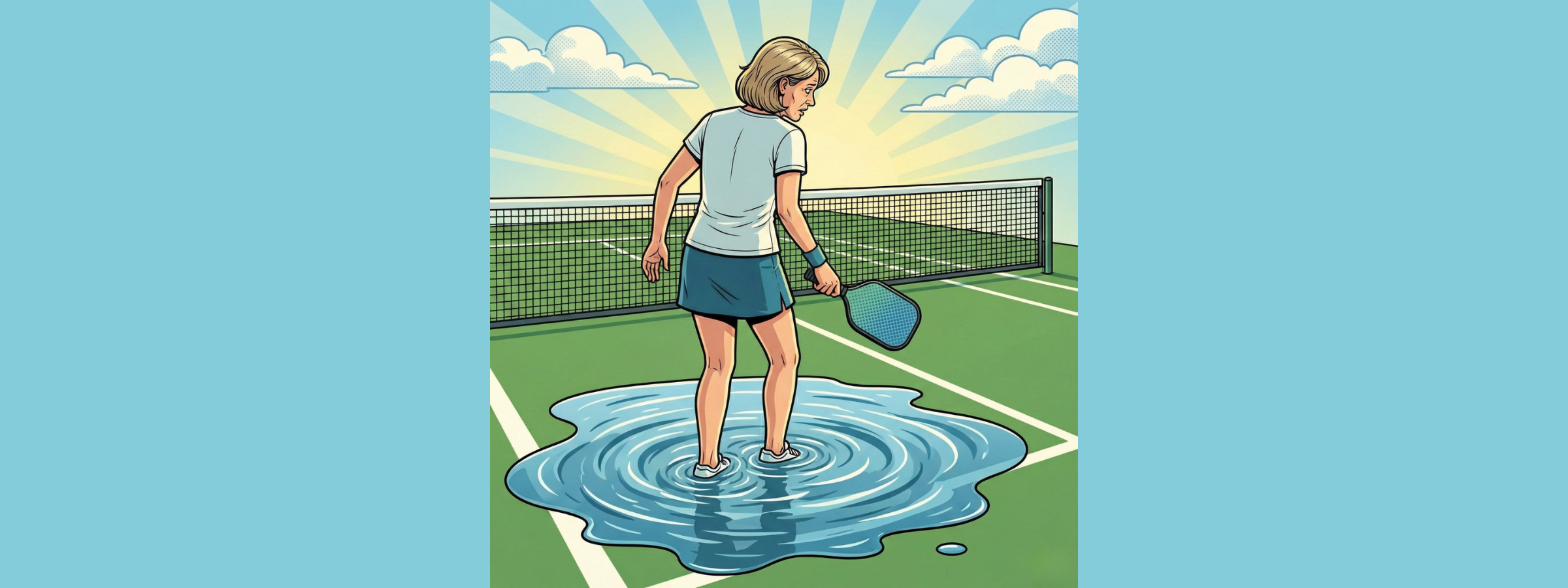
A: Getting stuck in no‑man’s‑land after you serve isn’t a foot‑speed problem. It’s a timing and decision problem. The transition zone is a place you move through—not a place you live. When you hesitate, rush, or move without a plan, you end up frozen between the baseline and the kitchen, defending balls you can’t attack and attacking balls you shouldn’t.
The fix isn’t sprinting forward or hanging back forever. It’s using a repeatable post‑serve sequence that tells you exactly when to stop, when to split‑step, and when to move.
Why No‑Man’s‑Land Keeps Catching You After the Serve
Most players don’t get stuck because they move forward—they get stuck because they stop moving at the wrong time. Common causes show up again and again in league and ladder play.
Some players admire their serve for a beat too long and start late. Others rush forward blindly and arrive off‑balance. Many serve short, inviting an aggressive return they aren’t prepared to handle. And a lot of teams lose sync, with one partner moving in while the other hangs back.
All of these lead to the same outcome: you’re standing mid‑court, paddle low, feet stuck, reacting instead of deciding.
The Simple Post‑Serve Sequence That Keeps You Moving
Strong transition play starts with a predictable sequence you can repeat every point. Think of it as a checklist, not a guess.
Serve, then recover toward the baseline and center yourself. As your opponent prepares to return, watch the height and depth of the ball—not where you hope it goes.
As the returner makes contact, split‑step. This is the moment that keeps you from drifting or freezing. From that balanced position, decide your third shot, then move forward behind it.
You do not run through the return. You hit first, then advance.
How to Read the Return Before You Move
Your third‑shot decision should be made from the information the return gives you. Three things matter most: depth, height, and opponent balance.
Deep, low returns mean patience. Plan a drop or soft reset and expect to take a few controlled steps forward. Higher or shorter returns that sit up give you permission to drive—if you’re balanced.
If the return jams you, pulls you wide, or forces you to hit while moving backward, a reset is the smartest option. Trying to force offense here is how players get stuck mid‑court.
Smart Third‑Shot Choices That Prevent Freezing
After a strong return, drops are your best friend. They slow the rally and give you time to advance together.
Drives should be used selectively—only when the ball is clearly attackable and you’re set. A rushed drive followed by hesitation leaves you stranded in the transition zone.
If you’re under pressure, a soft reset into the kitchen buys time and restores balance. Think control first, position second.
Move With Your Partner or Don’t Move at All
One of the fastest ways to get stuck is moving alone. If one player steps in and the other stays back, the team is exposed.
Talk early and simply. Words like “up,” “wait,” and “reset” keep both players on the same page. You should arrive at the kitchen together or stay back together—never split.
Footwork Rules That Keep You Safe and Balanced
In the transition zone, small shuffle steps beat big strides. Stay low, keep your paddle up, and split‑step before contact.
Never backpedal. If you need to retreat, pivot and side‑shuffle instead. This keeps you balanced and helps prevent falls and awkward lunges.
Drills That Fix No‑Man’s‑Land Habits
Serve + Split‑Step Drill: Serve, recover, and force a split‑step as your partner returns. No third shot until the split‑step happens.
Third‑Shot Decision Drill: Your partner varies return height. Drop on low balls, drive only on high balls, reset when rushed.
Partner Walk‑In Drill: Serve and advance only when both partners move together. Stop immediately if one player gets ahead.
No‑Volley Zone Game: No swinging volleys allowed in the transition zone. You must either step fully in to volley or stay back and drop.
Quick Self‑Checks During Play
Did I split‑step as the return was hit?
Am I moving forward behind my third shot?
Is my partner moving with me?
Am I choosing control before speed?