
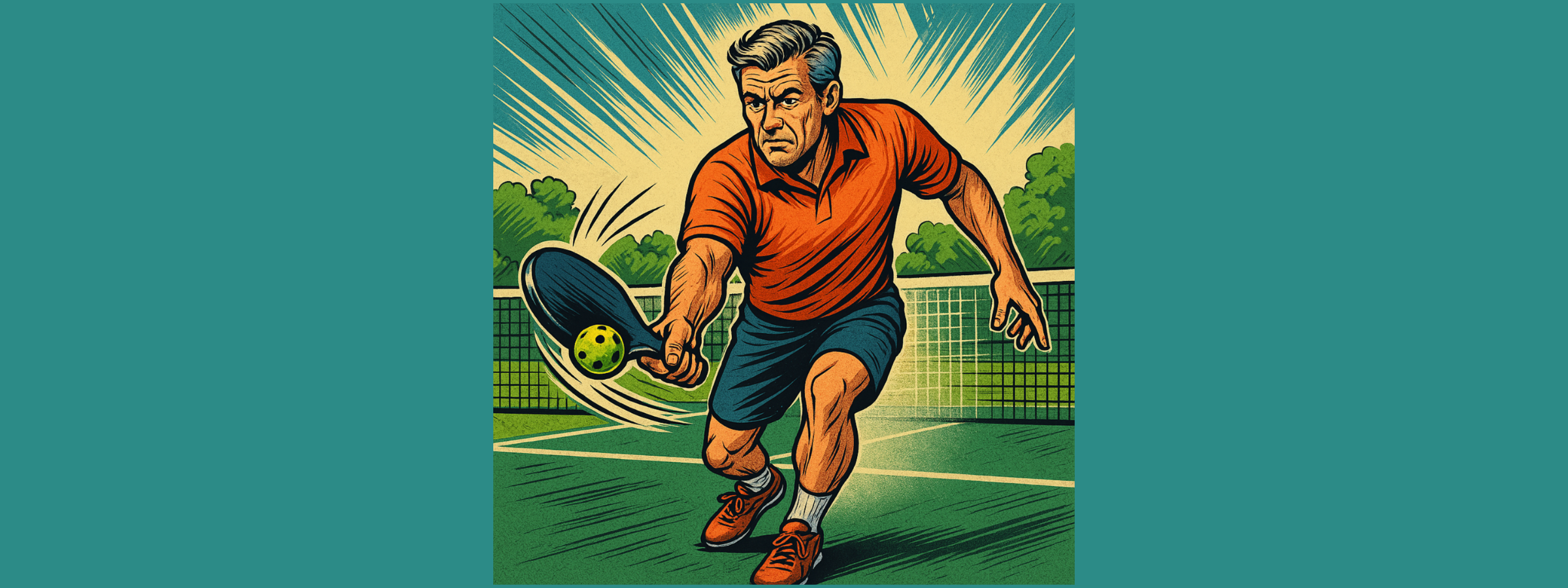
A: Few sounds in pickleball sting more than the clink of a ball clipping the edge of your paddle. It feels awkward, disrupts your rhythm, and often gifts your opponent an easy point.
Edge hits happen to everyone, from beginners to pros, but if they’re happening to you often, there are specific fixes. The key is understanding ball tracking, grip mechanics, sweet spot awareness, and how to prepare under pressure.
Why Edge Hits Happen
- Ball tracking: If your eyes shift to where you want the ball to go instead of watching it hit your paddle, you increase the risk of edge contact.
- Grip mechanics: A death grip or poor grip style reduces paddle control and delays reaction.
- Footwork: Reaching instead of moving your feet leaves you swinging from awkward angles.
- Shot choice: Trying low-percentage shots with little margin for error (like barely-clearing dinks) increases mishits.
- Paddle fit: Some paddle shapes have smaller sweet spots, and if the grip size or weight isn’t right, centering the ball becomes harder.
Fix #1: Track the Ball Into Contact
Edge hits often start with the eyes. Don’t glance up early. Tell yourself: “see it hit” as you strike. The simple cue of watching the ball all the way into the paddle dramatically reduces mishits.
Fix #2: Grip Technique & Relaxation
Your grip determines paddle stability.
- Use a continental grip (like holding a hammer). It naturally aligns the paddle face and works for forehands, backhands, and volleys.
- Keep grip pressure around 3–4 out of 10. Too tight, and the ball ricochets off awkwardly; too loose, and you lose control.
- Keep elbows slightly forward of your body. This puts the paddle in position to cover the middle and reduces last-second wrist flicks that lead to edges.
Fix #3: Aim for High-Probability Shots
Players often clip the edge because they’re trying for razor-thin targets—skimming the net or aiming near lines.
- Give yourself net clearance. Aim 6–12 inches above the tape, especially on dinks and drops.
- Favor middle or high-percentage zones. Missing “safe” shots less often means fewer mishits overall.
Fix #4: Sweet Spot Awareness
The sweet spot isn’t identical across all paddles:
- Wide-body paddles: bigger sweet spot, slightly above center.
- Elongated paddles: sweet spot may be closer to the center or slightly lower.
- Weight & balance: heavier paddles can feel more stable but slower; lighter paddles help quick reactions but punish mishits more.
Tip: Demo paddles when possible. Notice not only where the sweet spot feels solid, but also which grip sizes and shapes feel most natural in your hand.
Fix #5: Footwork & Positioning
Balanced feet equal centered contact.
- Stay on the balls of your feet in a ready stance.
- Use small shuffle steps instead of leaning or lunging.
- Move into the ball rather than letting it come to you.
Are Edge Hits Legal?
Yes. Contact on the edge of the paddle counts as a legal strike, as long as it follows service and volley rules:
- On serves: contact must be below the waist, with an upward motion.
- At the kitchen line: you can’t volley while standing in the non-volley zone.
So while an edge hit may look clumsy, if it drops in, it’s perfectly legal.
Drills to Reduce Edge Mishits
- Wall Target Drill (Beginner-Friendly)
- Tape a circle on a wall about the size of a dinner plate.
- Stand 8–10 feet away and hit controlled volleys or dinks at the target.
- Over time, shrink the target to build precision.
Purpose: Improves hand-eye coordination and reinforces ball tracking.
- Partner Feed & Awareness Drill
- Stand at the kitchen line. Have your partner feed balls quickly at your torso and hips.
- Block each ball and call out “center” or “off” based on how it feels.
- The focus isn’t rallying—it’s developing awareness of clean vs. off-center hits.
Purpose: Builds muscle memory and trains awareness under pressure.
- Advanced: Third Shot Drop Pressure Drill
- Start at the baseline. Have your partner return balls with varying pace.
- Focus on executing controlled third shot drops that clear the net with margin and land in the kitchen.
- If you clip the edge or pop up, reset and repeat.
Purpose: Trains high-pressure shot control and reduces edge mishits in game-like conditions.
- Advanced: Transition Zone Footwork Drill
- Rally with a partner who alternates feeding balls to your feet and midline as you move from baseline to kitchen.
- Your job: shuffle, adjust, and keep shots in play while staying balanced.
Purpose: Simulates real match pressure, forcing you to track and square up consistently.
Final Takeaway
Edge hits aren’t random—they’re feedback. If you’re clipping the paddle edge often, the root cause is usually one of three things: ball tracking, grip control, or footwork. Add in high-probability shot choices and the right paddle fit, and your consistency improves dramatically.
Practice doesn’t need to be endless. Start with awareness drills, then add pressure-based exercises to simulate real games. Over time, you’ll stop hearing that frustrating clink and start feeling the satisfaction of solid, centered contact.