
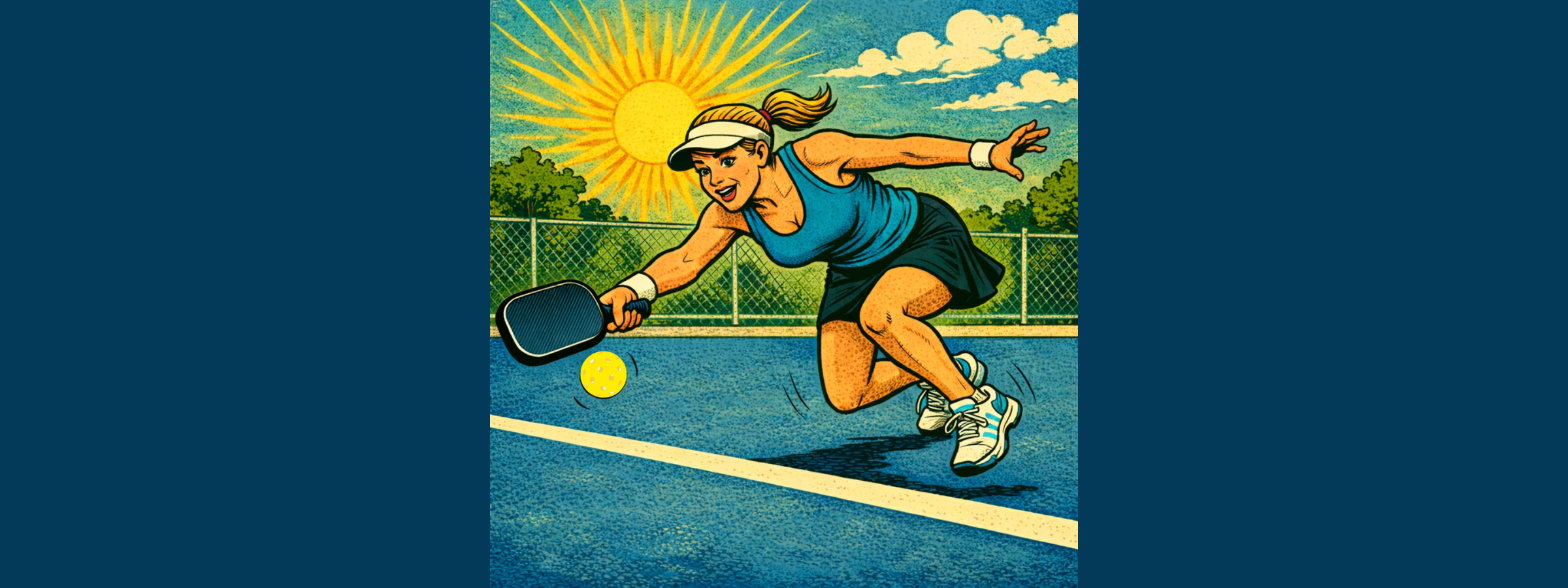
If you feel like you’re constantly lunging, tipping forward, or scrambling to recover after reaching for low balls at the kitchen, it’s not a balance issue in the traditional sense. It’s a movement problem.
Most players don’t lose balance because they’re slow, stiff, or “too old.” They lose balance because they reach with their upper body before their feet and lower body are set. The kitchen punishes that habit immediately.
The truth is simple: when your paddle moves before your body, your balance is already gone.
What’s actually causing the imbalance
The most common mistake is leaning from the waist instead of lowering the body. When players see a low dink or soft volley, they bend forward, extend the arm, and hope they can “save” the ball. That forward lean pulls the center of gravity past the toes, and once that happens, recovery is almost impossible.
Another major issue is frozen feet. Many players stand tall at the kitchen line and try to handle everything with their hands. When the ball drops lower than expected, the paddle reaches but the feet stay planted. That mismatch forces a lunge.
Locking the knees also plays a role. Straight legs make it hard to adjust height smoothly. The moment you have to reach down, your upper body compensates — and balance disappears.
Finally, there’s urgency. Players rush low balls because they feel late, even when they aren’t. That panic leads to last-second reaching instead of early positioning.
What balanced kitchen movement really looks like
Balanced kitchen play starts from the ground up. The lower body moves first. The paddle follows.
Good kitchen players stay slightly crouched, with hips under shoulders and weight centered over the balls of the feet. Their chest stays quiet. Their head stays level. When a low ball comes, they don’t dive at it — they drop into it.
A small settle or split-step as the opponent contacts the ball makes this much easier. That tiny bounce keeps your feet alive so they can move first instead of freezing.
Instead of leaning forward, they bend the knees. Instead of stretching the arm, they take a small shuffle or drop step. Even a few inches of foot movement creates space and stability.
The paddle stays out in front, so the arm never has to reach far. Contact happens close to the body, not at full extension. After the shot, they’re still balanced enough to handle the next ball immediately.
That’s the real test: could you hit the next ball if it came right back?
If not, the reach was the problem.
Reaching down vs. reaching forward
One distinction makes this click for most players.
Reaching down by bending the spine collapses posture and shifts weight forward. Reaching forward by lowering the body keeps the center of gravity stable.
The fix is simple but powerful: bend your knees, not your back.
When your knees lower your body, your head stays level and your balance stays intact. Your paddle travels forward through the ball instead of scooping or flicking. You’re still athletic after contact, not stuck recovering.
When you shouldn’t reach at all
Not every low ball is yours to take.
If a dink pulls you deep into the kitchen, forces you to lean past your toes, or leaves you off-balance at contact, the smarter choice is often a soft reset — or letting your partner handle the next ball if they’re better positioned.
For example, if a sharp cross-court dink drags you past the center line and onto your outside foot, trying to flick a winner usually ends badly. A higher-margin reset back cross-court keeps you upright and buys time to recover.
Low balls below net height, especially when you’re moving or stretched, are moments to neutralize, not attack.
The best kitchen players don’t win points by reaching. They win them by staying available.
Simple fixes you can apply immediately
At the kitchen, widen your stance slightly and keep your toes just behind the NVZ line. That small buffer gives you room to lower your body without tipping forward.
Before dink exchanges, think “hips first.” Drop your hips a touch before the ball arrives. That one habit removes the need to lunge later.
Take one micro-step instead of leaning. Even a tiny shuffle gives your paddle room to move cleanly.
Use this cue: move first, touch second.
If the paddle goes first, you’re already late.
Aim resets deeper in the kitchen, closer to the NVZ line. Deeper soft balls keep opponents from pulling you forward again immediately and give you time to re-balance.
Drills that actually build balance
A simple Low Ball Reset Drill works well. Have a partner feed low dinks. You’re not allowed to hit unless you take a step first. Start at about 60–70 percent speed so the focus stays on smooth movement, not survival.
Try a One-Step Rule Drill during dink rallies. No reaching is allowed without foot movement. If your feet don’t move, the point stops.
Use a Balance Hold Drill: after contact, freeze for one second. If you’re tipping, falling, or scrambling, you reached too far.
For live play, a Kitchen Patience Game helps. Points only count if you recover balance before the next shot. It quietly trains better decisions instead of desperation reaches.
A quick self-check during games
Ask yourself:
Did my feet move before my paddle?
Am I bending my knees or my back?
Could I handle the next ball right now?
Those answers tell you everything.
The real takeaway
Losing balance at the kitchen isn’t about age or athleticism. It’s about sequence.
Move earlier, and you won’t need to reach.
Stay under control, and low balls stop feeling dangerous.
Keep your body balanced, and the kitchen becomes a place of patience instead of panic.
That’s how steady kitchen players stay upright — and stay in points.