
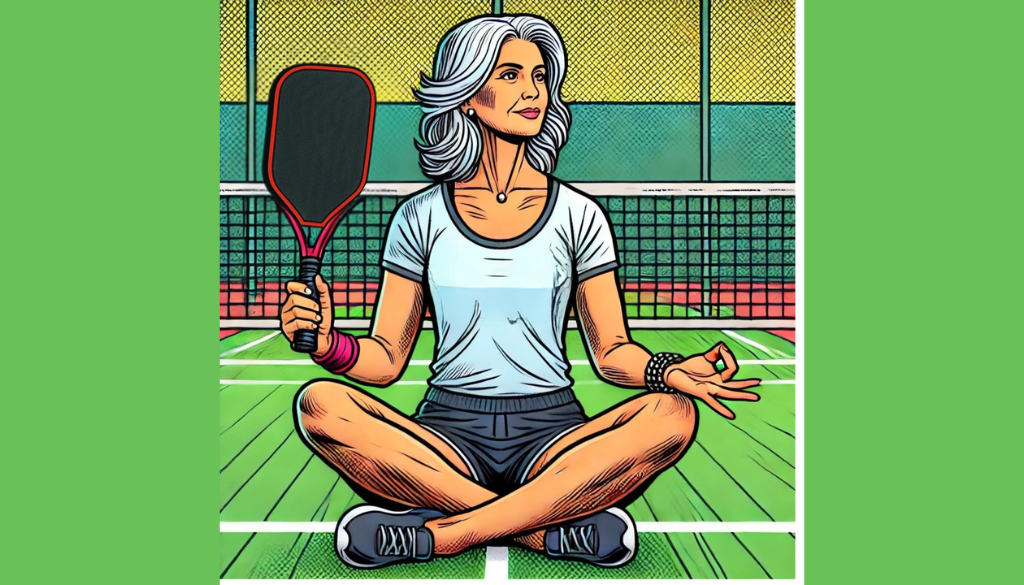
A: Almost everyone who plays pickleball runs into this.
In open play or rec games, you feel loose. Your shots flow. You see the ball clearly and react without thinking.
Then a ladder match or league night starts… and suddenly you’re missing routine dinks, pushing volleys into the net, or hesitating on balls you normally handle easily.
You didn’t forget how to play.
Your nervous system just shifted gears.
The real difference between rec and competitive play
Rec games feel casual.
League and ladder matches feel like they count.
That one mental change flips how your body and brain behave.
In rec play:
- You swing freely
- You react on instinct
- You focus on the ball
In competitive play:
- You think about outcomes
- You worry about mistakes
- You try to “play right” instead of just play
That extra thinking changes timing, spacing, and decision-making even though your technique is the same.
Pressure changes timing, not skill
When a match matters, your body releases adrenaline.
Adrenaline:
- Raises your heart rate
- Tightens your grip and shoulders
- Changes your swing size and tempo
That’s why in league play:
- Balls feel like they arrive faster
- Your paddle feels heavier
- You swing a little too early, too late, too big, or too small
Your mechanics didn’t disappear.
Your rhythm did.
Why trying harder makes it worse
In rec games, you let the ball come to you.
In competition, you try to force good shots.
That shows up as:
- Reaching instead of moving
- Swinging bigger instead of smoother
- Aiming closer to lines instead of safer targets
Pressure makes players play tighter and riskier at the same time — a bad combination.
Your brain switches from “play” to “protect”
When the score matters, your brain goes from:
“See ball → hit ball”
to:
“What if I miss?”
“Don’t mess this up.”
“I need this point.”
That hesitation causes:
- Late volleys
- Pop-ups
- Tentative dinks
- Rushed put-aways
How to bring your rec-game into league play
You don’t need new strokes.
You need a better competition routine.
1) Use a pre-point reset
Before every serve or return:
- Take one slow breath
- Relax your grip
- Say one simple cue in your head
“Smooth and deep” or “See the ball”
This keeps your body in play mode instead of panic mode.
2) Shrink your targets when it matters
In rec play you might aim for lines.
In league play, aim for space.
Think:
- Serves and returns → deep middle
- Kitchen balls → middle and feet
- Put-aways → body, not corners
Big targets calm your nervous system because you’re not gambling on precision.
3) Play the first five points boring
Most nerves fade after a few rallies.
Early in the match:
- Hit safer serves
- Dink more
- Build rallies
Tell yourself: “Just build patterns for five points.”
You’re collecting timing, not auditioning.
4) Give yourself permission to not be perfect
Trying to look good is poison.
Tell yourself:
“I’m here to compete, not impress.”
That frees your swing.
Practice that makes pressure feel normal
Drill 1: Score-Pressure Points
Play mini-games to 3.
Each error moves the score by 2 instead of 1.
The goal isn’t perfection — it’s getting used to caring about every ball.
Drill 2: Last Ball Counts
Play normal rallies, but only the final ball decides the point.
You still play each shot correctly — this just trains you to stay calm when it feels like “this one matters.”
Drill 3: One-Target Games
Play games where everyone must hit through the middle or crosscourt only.
Fewer decisions = more natural timing.
One last truth
If you play better in rec games, that’s a good sign.
It means:
- Your strokes work
- Your instincts are right
- Your issue is managing pressure, not skill
When you learn to calm your mind, your league game starts to look a lot more like your rec game.
And that’s when you start winning more than just the easy games.